28 August – FGV is officially delisted from the Main Market of Bursa Malaysia.
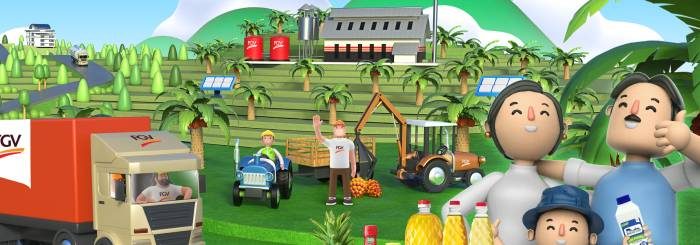
18 June – FGV premiered its latest corporate video, marking a milestone in its journey of growth and innovation.
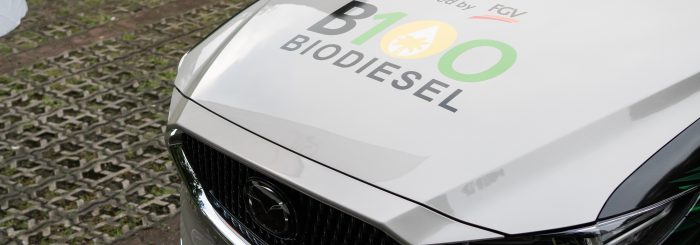
5 March – FGV launched the B100 Biodiesel Campaign, advancing palm-based biodiesel while supporting smallholders and strengthening the local palm oil industry.
1 May – FGV’s near-term and net-zero greenhouse gas (GHG) emissions reduction targets have been officially approved by the Science Based Targets initiative (SBTi).
2024
11 October – FGV established Gender Diversity in Top & Key Management Policy.
8 October – FGV launched its Enhanced Sustainability Framework, strengthening five key pillars: Economic Growth, Governance, Social, Environment, and Innovation & Technology.
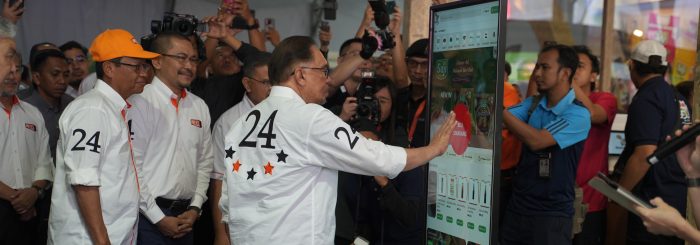
14 July – FGV launched KedaiFGV.com, an e-commerce platform officiated by the Prime Minister, reinforcing Malaysia’s food security agenda.
22 January – FGV launched ‘FGV Bersedia’, its official anthem that embodies unity, resilience, and the company’s global aspirations.
2023
1 September – FGV Unveiled New Corporate Video in Cultivating a Sustainable Future
27 February – FGV’s FY2022 Financial Performance Charted New Record Since Listing
2022
22 June – FGV and Project Liber8 Collaborated to Raise Awareness on Child Trafficking
14 June – FGV, MTUC and ILO Malaysia Collaborated to Raise Awareness on Forced Labour and Child Labour
2021
2 September – FGV’s Board Established Committee for Sustainability
5 March – FGV Established Committee on Gender Equality and Women Empowerment
2020
3 July – FGV Introduced Model Plantation Concept for the Transformation of Its Estates and Mills’ Operations.
5 March – FGV Achieved 100% MSPO Certification
2019
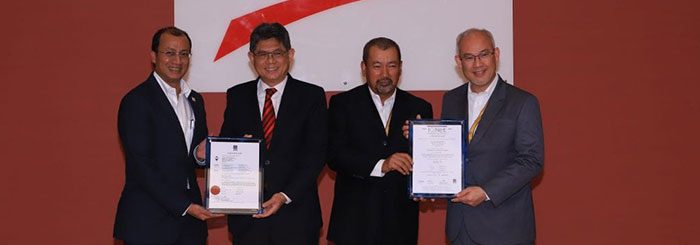
18 December – FGV received the internationally recognised ISO 37001:2016 certification for its Anti-Bribery Management System.
12 October – FGV launched a new product, Adela Gold, a blended cooking oil, produced by its subsidiary Delima Oil Products Sdn. Bhd.
30 April – FGV launched its SAJI Sayangi Sawitku campaign in support of the Ministry of Primary Industries’ Love My Palm Oil campaign.
2018
13 September – FGV achieved impressive results in its collaborative effort with the Malaysian Palm Oil Board in testing the usage of 10% (B10) palm methyl ester mixture in its logistics, plant and plant operations.
29 June – The shareholders of FGVHB approved the proposal to change the Company name to FGV Holdings Berhad (FGV). The Special Resolution was duly passed with 99.92% of the votes cast in favour of the proposal.
19 April – FGVHB launched its Sun Bear Conservation Programme, which included the setting up of the first Sun Bear Community Action Group in Malaysia.
4 April – FGVHB launched its Young Entrepreneurship Programme with an aim to produce more young entrepreneurs in the palm oil industry.
2017
20 November – FGVHB launched its specially formulated fertilisers, MPOBF2 and Super K that support the growth of palm trees, maintain nutrients, and improve the efficiency of water infiltration and soil quality over the long term.
10 November – FGVHB signed the Malaysian Anti-Corruption Commission’s Corruption Free Pledge to formalise its commitment to good corporate governance.
22 March – FGVHB through its subsidiary Delima Oil Products launched a new logo for its flagship brand, Saji, most well-known for cooking oil and its culinary range of products.
2016
19 May – FGVHB launched Malaysia’s first Ganoderma tolerant oil palm planting material.
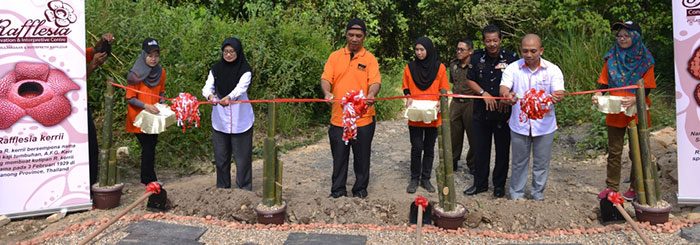
15 November – FGVHB in collaboration with the Forest Research Institute on Malaysia, through a ground-breaking ceremony, announced the Rafflesia Conservation and Interpretive Centre in Perak
2015
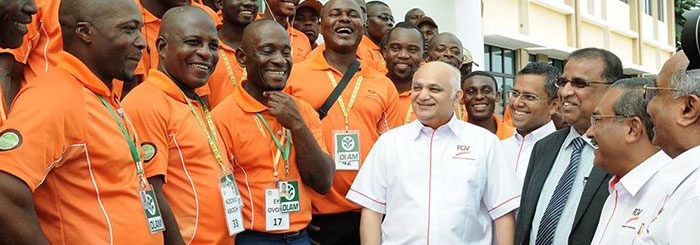
26 October – FGVHB teamed up with Olam International Ltd to provide a training programme in Oil Palm Plantation Management for over 2,000 Gabonese smallholder farmers to help them become commercially viable RSPO certified plantation owners in Gabon.
2014
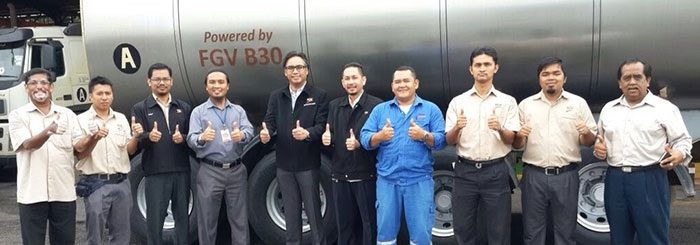
9 December – FGVHB was the first company in Malaysia to successfully test one of its tankers with the B30 biodiesel.
2013
17 April – FGV Biotechnologies Sdn. Bhd. was incorporated to undertake the production of biodiesel and expand the Group’s product offering.
27 December – FGV acquired the remaining 51% in FHB from KPF for a purchase consideration of RM2.2 billion.
2012
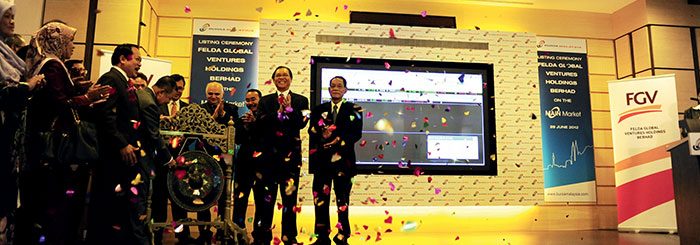
28 June – Felda Global Ventures Holdings Berhad (FGVHB) was listed on Bursa Malaysia. The initial public offering, which was the world’s third largest in 2012. FGV raised RM4.5 billion from the listing exercise, while FELDA received RM5.5 billion.
FGVHB launched its fourth biogas power plant which supplies electricity to about 3,000 households in Felda Umas in Tawau, Sabah.
2011
1 November – FGVHSB entered into a Land Lease Agreement (LLA) with FELDA, whereby, 351,000 ha of FELDA’s land was leased to FGVHSB for a period of 99 years. Under the terms of the LLA, FGV agreed to an annual fixed lease payment of RM248 million a year and a 15% share of the operating profits from the LLA land.
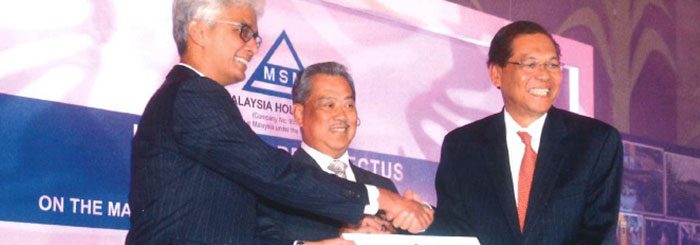
28 June – MSM Malaysia Holdings Berhad was listed on the Main Market of Bursa Malaysia Securities Bhd. It was the first company within the Felda Group to be listed in Malaysia that raised RM796 million through the exercise.
2010
The Felda Group became the world’s first smallholder organisation to achieve the Roundtable on Sustainable Palm Oil Certification.
FGVHSB achieved International Sustainability and Carbon Certification (ISCC) that meets the European Union’s Renewable Energy Directive (RED). 8 complexes were ISCC certified. This makes FGVHSB the first integrated supply chain outside of Europe to receive certification from ISCC.
20 January- FGVHSB became Malaysia’s largest sugar producer by acquiring Malayan Sugar Manufacturing Company (MSM. Co) and Kilang Gula Felda Perlis Sdn. Bhd.
2009
FGV acquired FELDA’s 49% stake in Felda Holdings Berhad (FHB) for RM1.57 billion. FHB owns 72% of Felda Palm Industries Sdn. Bhd., which in turn owns and operates 68 palm oil mills.
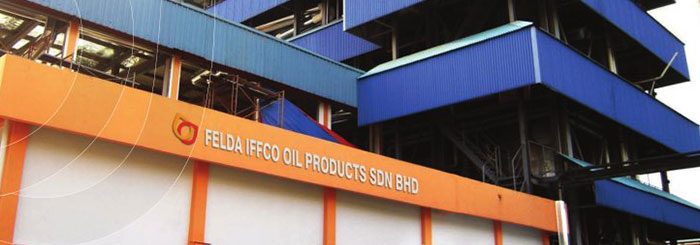
FGVHSB acquired 50% equity interest in FELDA IFFCO Sdn. Bhd. (a joint venture with IFFCO Holdings Ltd) and Trurich Resources Sdn. Bhd. (a joint venture with Tabung Haji).
2008
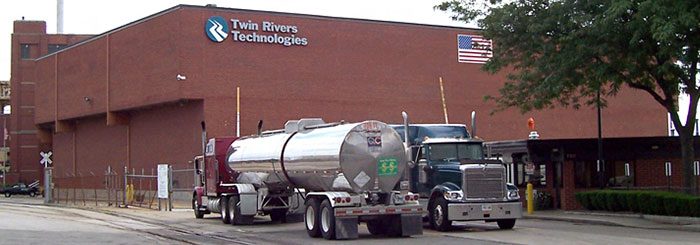
FGVHSB acquired FELDA’s investments in North America including Twin Rivers Technologies Holdings Inc.
2007
FELDA incorporated Felda Global Ventures Holdings Sdn. Bhd. (now FGV Holdings Berhad) to operate as a commercial arm for FELDA’s overseas investments in the upstream and downstream palm oil businesses as well as other agri-businesses.
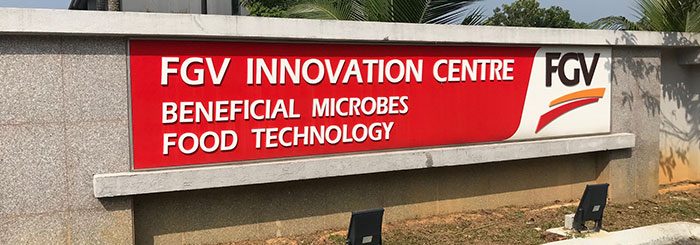
Felda Biotechnology Centre (now FGV Innovation Centre) was commissioned at Enstek, Negeri Sembilan, the largest of its kind in Southeast Asia.
2004
FELDA commissioned the Sahabat biomass power plant in Lahad Datu, Sabah – the first Clean Development Mechanism project in the world that runs entirely on Empty Fruit Bunches.
1995
Felda Holdings Sdn. Bhd. (FHSB) was set up as FELDA’s commercial arm. All Felda companies and corporations became subsidiaries under FHSB.
1992
Commercial planting operations began under FELDA Plantations Sdn. Bhd.
1989
A joint venture company, FPG Oleochemicals was formed between FELDA Holdings Berhad and Procter & Gamble Co., to produce alcohol, methyl esters and glycerin.
1985
Felda Rubber Corporation Industries (now FGV Rubber Industries Sdn. Bhd.) was set up to operate rubber processing factories. Production included latex concentrate, SMR 10 & 20, SMR CV and compound rubber.
1980
FELDA established an investment co-operative (Koperasi Permodalan Felda or KPF) to provide settlers and FELDA employees with an opportunity to invest in FELDA companies.
1978
The Agricultural Services Corporation (now Felda Agricultural Services Sdn. Bhd.) was formed to produce planting stock for oil palm.
1972
FELDA launched the Lembaga Kemajuan Tanah Persekutuan Research Centre in Tekam, Pahang on 3 February 1972.
It was later renamed to Pusat Penyelidikan Pertanian Tun Abdul Razak.
1971
FELDA embarked on its first joint venture with Perlis Plantation Berhad to establish Kilang Gula Felda Perlis Sendirian Berhad, a sugar milling and refining facility.
1956
Federal Land Development Authority (FELDA) was formed on 1 July 1956 under the Land Development Ordinance (now Land Development Act), with an objective to eradicate poverty by developing land through the cultivation of cash crops.
FELDA was established with a starting capital of RM10 million.
From 1957 to 1990, Felda has since resettled 112,635 families.